
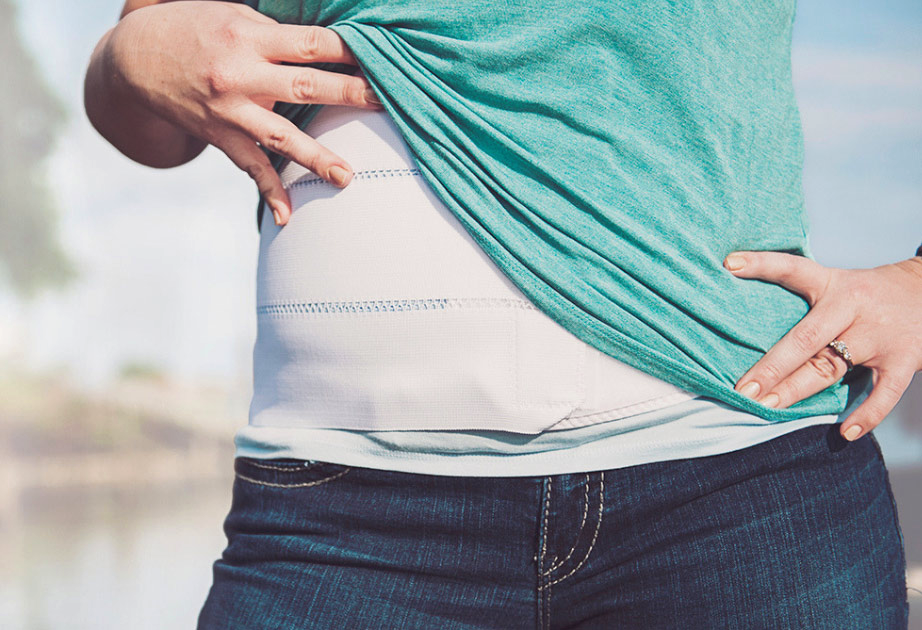
Old Splint ( Clearance Sale )
Get the best deal on our original models, still in stock. The Tummy Team Splint is a non-restrictive rehab support built to reinforce your transverse abdominis through pregnancy, postpartum recovery, and diastasis recti healing.
2 Panel splints fit a narrower size range. See sizing details
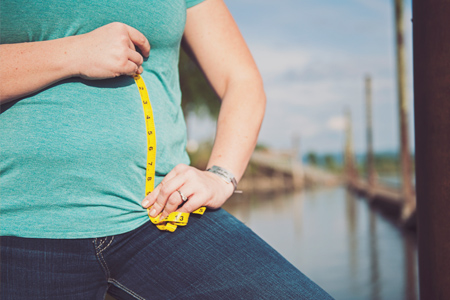
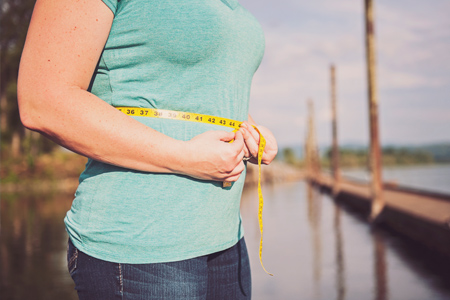
Find Your Correct Size
Bodies are different lengths. Your splint should match yours. Here is how to find your size.
We offer the Tummy Team Splint in 2-panel, 3-panel, and 4-panel sizes, built for short, average, and long torsos. Most people land in the 3-panel. If you're between sizes or unsure, that's almost always the better call than going smaller.
Measure Your Torso Height
Using a flexible tape measure, find the distance in inches from the top of your hipbone to the bottom of your rib cage. That number determines which panel size you need: 2, 3, or 4-panel.Measure Your Tummy
Measure around your tummy at its widest point, usually at the navel, without sucking in or pushing out. Measure the tummy you actually live in. That number determines your splint length.Additional Considerations
- The most effective fit covers as much of your transverse abdominis as possible without being too bulky. Holding the tape measure against your body where each panel would fall can give you a clearer picture than the numbers alone.
- When in doubt on height, choose the 3-panel. Most clients do best in it, and if you fall between sizes it is always the safer choice.
- The 2-panel is designed for short torsos. If your measurement puts you in the 2-panel range but you do not have a short torso, the 3-panel will likely serve you better.
- The 4-panel is very tall and can be uncomfortable for people who sit for most of the day. If you stand more than you sit and your measurements say 4-panel, go for it. If you sit most of the day, consider the 3-panel instead.
- If your length measurement falls between sizes, exhale fully, draw your tummy in slightly, and remeasure. If your measurement drops, choose the smaller size. If it stays the same, go with the larger. The splint needs to fit you at the start of the program.